PROFILE
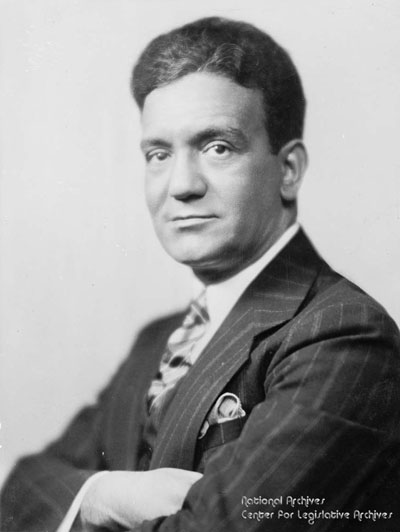
Ferdinand Pecora
Sixteen Months
Chief Counsel, Senate Banking Committee · 1882 – 1971
Sixteen Months: How the Pecora Hearings Wrote the Securities Laws
In January of nineteen thirty-three, the United States Senate hired a man to find out what had happened to the country's money.
They were not serious about it. The investigation had been running for a year and had produced nothing. Two chief counsels had come and gone. The committee was nearly out of budget, out of time, and preparing to hand the whole business to a new administration and let it die quietly.
The man they hired was a forty-eight-year-old assistant district attorney from New York named Ferdinand Pecora. He was Sicilian, born in Palermo, brought to America as a child. His father was injured in a factory and the family went poor. He left school to work, finished high school at night, and got through law school the same way. He had spent his career prosecuting small-time swindlers in Manhattan. He had no standing in Washington and none whatsoever on Wall Street.
They paid him two hundred and fifty-five dollars a month.
He asked for three weeks to prepare, and he spent them inside the records of the largest bank in the country.
What he did over the following sixteen months rebuilt the legal structure of American finance. Every rule you will study for a securities license traces back to a room where this man was asking questions.
Start with what the country did not have in nineteen thirty-three.
There was no requirement that a company tell the truth before selling you its stock. No requirement that its financial statements be examined by an accountant who did not work for it. No ongoing reporting after the sale. No agency with authority to police any of it. If a bank wanted to take a loan going bad on its own books, wrap it into a bond, and sell that bond to its own depositors, nothing in American law said it could not, and nothing said it had to mention what it was doing.
That is not a loophole. That is the entire condition of the market, and it had just cost the country everything.
Pecora's first witness was Charles Mitchell, chairman of National City Bank — the institution that would eventually become Citibank — and one of the most powerful men in American finance.
Mitchell arrived expecting a formality. He had been publicly credited with helping arrest a panic in nineteen twenty-nine. He was appearing before a committee that had accomplished nothing in a year, and he brought lawyers to a hearing he assumed he was doing the Senate a favor by attending.
Here is what came out of him over the next several days, in his own words, on the record.
National City had underwritten bonds for the government of Peru and sold them to American retail investors. The bank's own people had reported internally that Peru was a bad credit — politically unstable, financially unreliable, a poor risk. The buyers were told none of that. When Peru defaulted, the losses landed entirely on the customers.
The bank had taken other Latin American loans that were deteriorating on its books, bundled them into securities, and moved them out to the public through its securities affiliate — an affiliate that carried the bank's own name, and therefore the bank's reputation for safety, into a business the bank was not supposed to be in.
The salesmen worked on quota. There were contests. The affiliate ran a sales operation, and what it was selling was the bank's good name.
And Mitchell, who had been paid more than a million dollars out of the bank's management bonus pool in nineteen twenty-nine, had paid no federal income tax that year. He explained the method himself: he sold a block of National City stock to his wife at a loss, booked the loss against his income, and reacquired the shares afterward. A sale that moved nothing and changed nothing, executed for the sole purpose of erasing his tax bill.
He resigned within days. The newspapers found a word for men like him, and it stuck for a generation. Banksters.
Pecora kept going for sixteen months.
He put the House of Morgan on the stand and established that J.P. Morgan Junior and every one of his partners had paid no federal income tax at all in nineteen thirty-one or nineteen thirty-two. He established the existence of the preferred list — a roster of politicians, cabinet officers, generals, judges, and newspaper publishers who had been offered stock at prices below what the public would pay. Nothing so crude as a bribe. Just a favor, extended to precisely the people best positioned to return one.
The hearings ran on the front page for a year. At one point a circus press agent slipped a small woman onto Morgan's lap during a recess, and the photograph went around the world. That image — the most powerful banker in America with a performer perched on his knee, looking faintly embarrassed — did more to end Wall Street's untouchability than any single line of testimony.
But it is the testimony that changed the law, and it is worth naming each piece, because these are the rules that govern the market you are going to work in.
The Securities Act of nineteen thirty-three. Before you sell a security to the public, you register it and you disclose. The prospectus becomes a legal document with liability attached. Lie in it, or leave out something material, and you can be sued for it. This is the answer to Peru.
The Glass-Steagall Act of nineteen thirty-three. Commercial banking and investment banking are separated. The institution holding your deposits stops being the institution underwriting and selling securities to you. This is the answer to the affiliate that carried the bank's name. That wall stood for sixty-six years, until Congress removed it in nineteen ninety-nine.
The Securities Exchange Act of nineteen thirty-four. Ongoing reporting for public companies, so disclosure does not end at the sale. Rules against manipulation. Registration and regulation of exchanges and brokers. And the creation of a body with the authority to enforce all of it — the Securities and Exchange Commission.
Franklin Roosevelt appointed Joseph Kennedy as the SEC's first chairman, which surprised a great many people, since Kennedy had built much of his fortune doing the exact things the new agency existed to prevent. Roosevelt's reported reasoning was that it takes a thief to catch one.
Ferdinand Pecora was appointed one of the first commissioners.
He had wanted the chairmanship. He did not get it. He served a matter of months, left for a judgeship in New York, and spent the rest of his working life on the state bench. He ran for mayor once and lost. He died in nineteen seventy-one at eighty-nine, and his name appears on none of the four acts he caused.
Here is the assessment.
Nearly everything on a securities licensing exam is downstream of sixteen months of hearings run by an immigrant prosecutor the Senate hired at two hundred and fifty-five dollars a month because it had exhausted the alternatives.
Disclosure requirements exist because National City sold Peruvian bonds to people who were not told what the bank knew. Independent audit requirements exist because there was no one whose job it was to check. The separation of banking from securities dealing existed because one institution had been standing on both sides of the transaction. The SEC exists because nobody was looking.
None of it was reasoned out in the abstract by a legislature with good intentions. Every rule is a scar. Someone did the specific thing the rule now forbids, in public, under oath, and a country that had just lost its savings read the transcript over breakfast.
That is the thing to carry into the material. When a rule seems arbitrary, it is because you have not yet been told whose conduct produced it. There is always a name, a date, and a transcript.
Pecora wrote his own account in nineteen thirty-nine. His argument was that the truth about the market had stayed hidden not because it was complicated, but because concealment paid — and that the moment it was dragged into daylight, reform became impossible to stop.
He was the man who dragged it.